Learning Hub ▶ manure separation
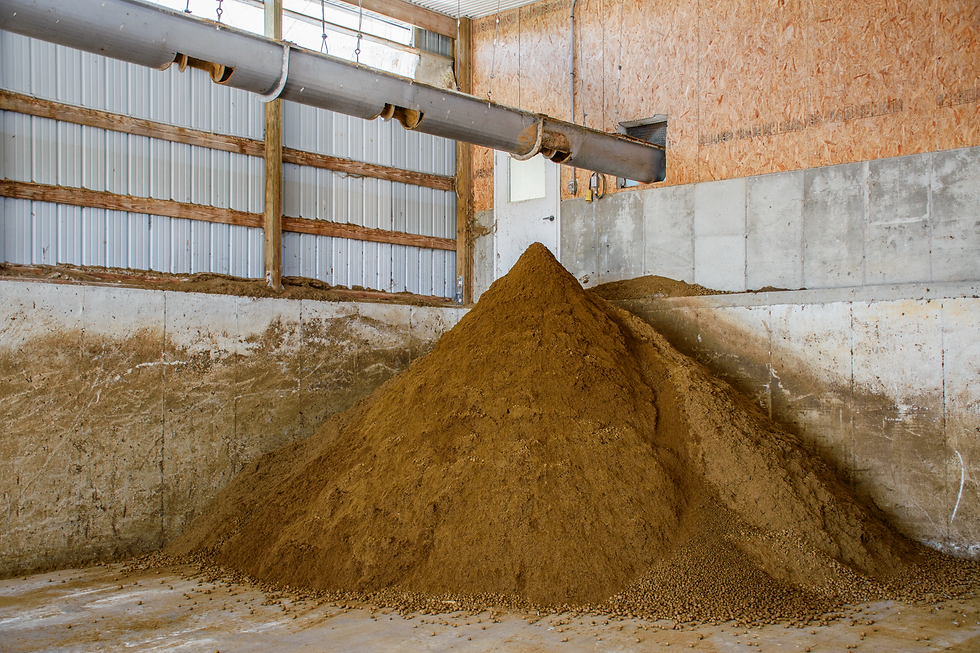
Mechanical manure separation and the use of manure solids as cattle bedding
This course introduces mechanical manure separation and the use of separated manure solids as dairy cattle bedding. It explains how separation systems work, what benefits they can provide for manure handling, storage, nutrient management, bedding recovery, and emissions reduction, and what design and management considerations are important for successful implementation.
Contents
Digital Resources
Summary Presentation
SPEAKER : Eric Hassel, Dairy Management Inc.
Downloadable Resources
Manure Separation Basics
Mechanical manure separation uses screens, presses, and other equipment to separate manure slurry into solid and liquid fractions.

Types of solids
The solids in dairy manure are not all the same. They range from large, coarse fibers to very small fine particles. These differences matter because particle size affects how easily solids can be separated, what type of equipment is most effective, and where nutrients tend to end up after separation. In general, coarse fibers are easier to capture with basic screens and presses, while finer particles are harder to remove and may require more advanced separation technologies or chemical assistance. Fine particles are especially important for nutrient management because a large share of organic nitrogen, phosphorus, proteins, and degradable carbon can be associated with smaller particles.
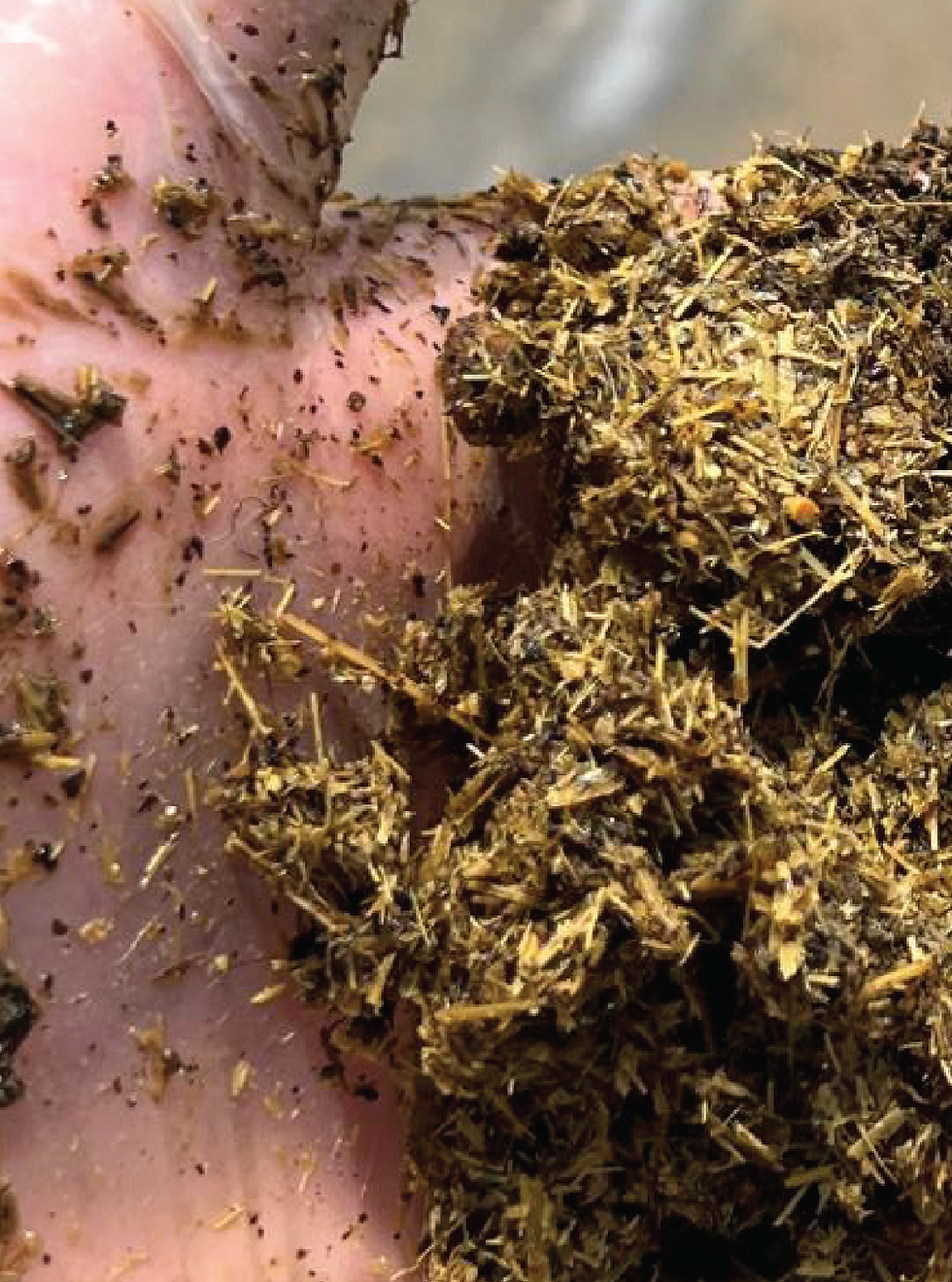
Composition: Coarse fibers are the larger, more fibrous manure particles that are relatively easy to separate from a manure slurry. They often come from undigested feed particles, bedding material, and other fibrous organic matter.
Suitable Technology: Because they are larger, they can be captured by relatively simple mechanical separation technologies such as sloped screens, rotary screens, vibrating screens, screw presses, and belt presses.
Uses: Coarse solids are often the main fraction recovered when farms are producing recycled manure solids for bedding. They are generally more carbon-rich and less nutrient-dense than fine particles, although their actual nutrient content depends on diet, bedding, manure handling, storage time, and separator performance.

Composition: Fine particles are smaller solids that stay suspended in the liquid manure stream and are more difficult to remove with basic screens.
Suitable Equipment: Removing fine solids requires more advanced equipment, secondary separation, or chemical assistance such as coagulants or flocculants.
Nutrient Composition: Fine particles contain a more significant portion of the manure’s organic nitrogen, phosphorus, proteins, and degradable carbon. For farms focused on nutrient recovery, phosphorus partitioning, odor reduction, or methane reduction, capturing fine particles may be especially valuable.
Stages of Separation
Manure separation can occur in multiple stages, depending on the farm’s goals. Each additional treatment stage can improve separation performance, but it also adds cost, energy use, maintenance, and management complexity.
Primary Separation
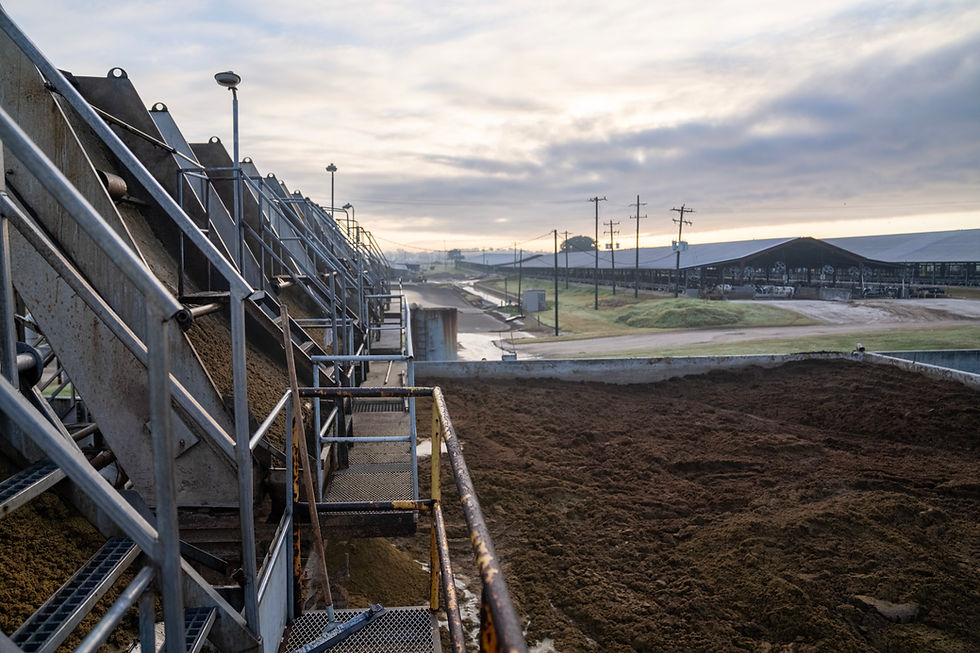
Primary separation removes the most easily captured solids and is commonly used to improve manure pumpability, reduce solids buildup in storage, recover bedding material, and prepare manure for covered storage or additional treatment.

Secondary Separation
After primary separation, the remaining liquid may undergo secondary separation to capture additional fine solids, organic matter, or nutrients. These systems are often used when farms are focused on phosphorus management, nutrient recovery, odor reduction, or reducing volatile solids before storage.

Tertiary Treatment
Some farms may also use tertiary treatment, such as ultrafiltration, membrane systems, or other advanced technologies, to further concentrate nutrients or produce a cleaner water stream for reuse or regulated discharge. Each additional treatment stage can improve separation performance, but it also adds cost, energy use, maintenance, and management complexity.
Benefits of Manure Separation
Manure separation can provide multiple economic, environmental, and social benefits. Manure separation may be a good fit when a farm is trying to reduce solids buildup in storage, improve manure pumpability, recover bedding, prepare manure for covered storage or advanced treatment, improve nutrient distribution, reduce bedding purchases, or make manure hauling more efficient. It may be less appropriate when the farm lacks adequate labor, space, electrical service, solids storage, or a clear use for the separated solids.
If the farm is separating simply to remove solids from their manure, they might select different separation equipment and screen sizes and have different operating and maintenance requirements than if they are trying to generate consistent high-dry-matter solids for use as cattle bedding, which may put more wear on equipment.
It is important that the farm's goal is well-defined and communicated to the professionals who design its separation system.
Overview of Manure Separation Benefits

Improving the economics of manure hauling
Separated liquids are more easily pumped and manure solids are more easily hauled further distances.

Reducing manure slurry volumes
Depending on how effectively separated solids are reclaimed from the manure slurry, between 10-20% of the manure volumes can be removed, preserving manure storage capacity (Oliver et al. 2018; Aguirre-Villegas et al. 2019)

Opportunities to improve manure nutrient management
Typically, around 10-25% of total nitrogen and phosphorus (as P2O5) and up to10% of potassium (as K2O) can be captured in the solids. These nutrients can be hauled to far-off fields or exported to other farms (Aguirre-Villegas et al. 2019). Separated liquids are also easier to apply with manure injection equipment, which helps conserve plant-available nitrogen and, when applied at recommended rates, reduces the risk of runoff.
Separation redistributes nutrients; it does not eliminate them. Unless solids are exported or treated further, the farm still needs to manage the same nutrients within the land base.

Reducing accumulation of solids in slurry storage
By reducing sludge accumulation, manure slurry storage capacity can be preserved, reducing the need for intensive manure agitation.

Preparing manure for other advanced treatments
Primary separation is a required prerequisite of advanced manure treatments and nutrient recovery systems.

Manure separation is required before a manure can be placed into a covered storage
An impermeable cover excludes rainwater and captures odorous, methane-rich manure gases which can then be mitigated in a biogas flare system. The cover makes it very difficult to agitate and resuspend solids for storage emptying. If a farm is interested in impermeable storage covers, they must first separate solids.

Reducing manure storage emissions
By reducing the amount of organic matter that is stored in a manure slurry storage anaerobically (without oxygen), there is a nearly proportional reduction in methane emissions. The magnitude of this reduction depends on separation efficiency, climate and manure storage management (IPCC, 2019).

Reclaiming fibrous cattle bedding
The separated solids recovered by mechanical separation systems can be used, with or without additional conditioning, as high-quality cattle bedding material. This is discussed in more detail below.
Types of manure separation
Manure separation technologies generally fall into two broad categories: systems that separate solids based on particle size and systems that separate solids based on particle density.
-
Particle-size systems, such as screens and presses, capture larger fibers and particles while allowing liquids and smaller particles to pass through.
-
Density-based systems, such as gravity settling, centrifuges, and hydrocyclones, separate materials based on how quickly heavier particles settle or move under gravitational or centrifugal force.
The simplest form of solid-liquid separation is gravity settling, also called sedimentation. In these systems, manure moves slowly through a basin or structure, allowing heavier solids to settle out before the liquid fraction moves on to storage or additional treatment.
Mechanical separators use powered equipment to screen, vibrate, press, rotate, or spin manure to separate solids from liquids and, in many cases, produce a drier solid fraction. These systems can include sloped screens, rotary screens, screw presses, belt presses, centrifuges, and other technologies. Their suitability and performance depend on several factors, including screen size, flow rate, manure total solids content, particle size distribution, and the farm’s goals for bedding recovery, nutrient management, storage, or further manure treatment.
Learn more about different manure separation technologies below.
Settling basins are flow-through concrete pits typically sized to detain the daily flow of liquid manure and allow for the settling of solids with an outflow that retains these solids as the liquid effluent flows into a larger storage or lagoon system.
Weeping Walls are an expansion of settling basin where a porous wall, typically made from swine nursery floor panels, is used to capture solids and allow manure liquids to drain and flow through. These systems typically have a large surface area that allows multiple months of solids storage and have multiple chambers to allow accumulated solids to be removed from one while the other continues to operate. See video to learn more.
Important Details:
Sedimentation is best suited for dilute manure such as feedlot runoff or flush waters.
While weeping walls can achieve high separation efficiencies, as solids are stored wet in basins and not as a dry product, they do not effectively reduce greenhouse gas [1].
The solids captured in sedimentation systems must be regularly excavated to keep these systems operable. As the solids are saturated, they must be stacked, dried and further managed to generate a more consistent, hygienic product that can be utilized as cattle bedding. This may only be feasible in warm, dry climates.
Sloped screens, separators partition manure solids using gravity flow through various configurations of a sloped bar slat or a wire screen. As a manure slurry flows as a sheet over the screen, separated liquids fall through the screen while separated solids are captured and slide off onto a pad or conveyor.
Learn more about Manure Separation: Coarse Solid-Liquid Separation via Sloped Screens and Screw Press
Important Details:
Sloped screens can remove solids at high rates but are best suited for flush-collected manure where the total solids content is between 2-4%.
Sloped screens can capture 49-61% of wet, stackable solids with a solids content between 17-25% [2]. Smaller screen sizes can capture more solids, but these solids typically have a high moisture content, as the smaller opening impedes the flow of liquids through screen openings [3].
Basic sloped screens have few moving parts, though more advanced vibrating, conveyor and external and internal flow rotary screens can improve screen performance. Screens can also be equipped with automatic cleaning systems to reduce cleaning labor and rollers that further dewater separated solids.
Belt and screw-presses partition manure solids using pressure. A belt press squeezes manure slurry between two porous moving belts to dewater the manure. A screw-press uses an auger that rotates with tight tolerance inside circular screens. As a manure slurry enters, the auger pushes liquid through the circular screens and dewatered solids out the end of the screen through back pressure plates onto a pad or conveyor.
Learn more about Manure Separation: Coarse Solid-Liquid Separation via Sloped Screens and Screw Press
Important Details:
Presses can process manure with higher total solids content (3-10%) more similar to the characteristics of manure as excreted or scrape collected.
These presses can capture 27-57% of solids with dry matter content as high as 35-42% [4, 5].
Screw-presses are more common than belt press systems for manure and advances in screw-press design and back pressure control systems are making solids outputs more consistent and reducing required press maintenance. Regular maintenance and replacement of worn parts (screens, augers, and gear boxes) are still required for successful operation. Screw presses can be utilized after sloped screens to achieve drier solids.
Hydrocyclones and Centrifuges utilize centrifugal forces to partition manure solids based on density, hydrocyclones by creating vortex flows and centrifuges by spinning at high speeds. Centrifuges are more commonly used to separate manure solids while hydrocyclones are more commonly used for sand separation.
Learn more about Manure Separation: Fine Separation via Centrifuge and Vibrating Screen
Important Details:
Best suited for manure with solids content less than 8% [6].
Centrifuges can have very high separator efficiencies, capturing 50-78% of solids, on a range of dry matter content
Centrifuges have a very high energy demand, operating and maintenance costs [3]. While centrifuges can be used for primary separation, they may be better utilized as a polishing step to recover additional solids from the separated liquid effluent of other mechanical separators.
Disc presses, vertical screws and microfilters are all emerging separation technologies that are well suited to secondary fine solids separation and phosphorous capture from the low-solids effluents of the above-mentioned separation equipment.
Important Details:
Fine-solids separators are generally best suited to low-solids manure or separated liquid effluent after coarse fibers, sand, and other large particles have already been removed.
They are particularly applicable where the management objective is to recover additional organic solids or particulate phosphorus rather than simply produce bedding fiber.
Because these systems are often proprietary and relatively new, there is not yet a defensible single removal-efficiency range that applies across disc presses, vertical screws, and microfilters.
Fine openings are more susceptible to plugging, making automatic cleaning, backwashing, or routine manual cleaning important. Pumps and filtration surfaces can also experience abrasion where sand or grit has not been adequately removed.
Separation can also be chemically assisted by using coagulants and flocculants which help fine manure solids clump and settle prior to mechanical separation. While greater separation efficiencies can be realized, these systems are more complex and costly as operation requires the continual purchasing and use of chemicals. As a result, coagulants and flocculants may be best utilized with advanced manure treatments targeting phosphorus partitioning and nutrient recovery.
Learn more about Manure Separation: Fine Separation via Chemical Flocculation and Dewatering Screens and Screw Press
Important Details:
Chemical treatment is particularly useful for dilute manure and previously separated liquid streams containing fine suspended and colloidal particles that cannot be efficiently captured using screens or presses alone.
It may be appropriate where the primary objective is phosphorus removal or recovery, rather than simply production of coarse separated solids.
Phosphorus capture can exceed 90% under optimized conditions. Polymer-assisted separation has achieved approximately 95% phosphorus removal from digested dairy manure, while flocculation prior to centrifugation increased phosphorus removal from roughly 60% to about 95% (Hjorth et al., 2008; Katers & Pelegrin, 2012).
Chemically assisted separation has higher operating complexity and costs than mechanical separation alone because coagulants or polymers must be continuously purchased, stored, mixed, and accurately dosed.
Additional equipment may include chemical storage tanks, pumps, mixers, controls, and downstream dewatering equipment.
Ultrafiltration and membrane systems have also been implemented at some large farms as a tertiary manure treatment. These systems can achieve even greater nutrient partitioning and produce water that can be utilized on farm or in some cases, in accordance with local regulations, be discharged to surface waters.
Systems may include several sequential technologies:
-
Microfiltration removes fine suspended particles.
-
Ultrafiltration removes very fine particles, colloids, microorganisms, and large organic molecules.
-
Reverse osmosis can remove most remaining dissolved salts and nutrients, producing a relatively clean permeate and a concentrated nutrient-rich stream.
Learn More: Nutrient Recovery: Ultrafiltration and Reverse Osmosis
Important Details:
Membranes are generally tertiary treatment technologies, not primary manure separators.
Manure typically requires substantial pretreatment—including sand removal, coarse solids separation, and often fine-solids removal—before membrane filtration. High suspended-solids concentrations can rapidly foul membrane surfaces.
Membrane systems are therefore most applicable where a farm has a specific need to recover water, substantially reduce liquid volume, or concentrate nutrients.
Microfiltration and ultrafiltration are effective at removing suspended solids and macromolecules but do not remove most dissolved nutrients and salts. Nanofiltration and particularly reverse osmosis provide progressively greater removal of dissolved constituents.
Membrane systems have high capital and operating costs compared with conventional solids separation.
Major operating requirements include:
-
pumping and pressure-generation energy;
-
membrane cleaning;
-
membrane replacement;
-
pretreatment;
-
management of concentrated nutrient streams; and
-
skilled monitoring and system operation.
Membrane fouling is one of the primary operational challenges.
-
-


Implementing Mechanical Separation of Manure
A mechanical separation system needs to be carefully integrated with a farm’s manure management system. Many considerations must be made when selecting and implementing a system.
Manure handling equipment
A successful separation system depends on a consistent, well-mixed manure slurry influent. This may require substantial changes to how manure is managed on the farm and the investment in additional manure collection pits, pumps, and agitators. Generally, at a minimum, a well-mixed collection pit is needed to supply the separators. In cold/wet regions, a structure is often required to house separators, their controls, this manure pit, and any additional manure equipment. A farm implementing separation may also need to invest in additional manure application equipment to handle both separated solids and liquids.
Storage of solids
A waste storage facility may be required to properly store separated solids until they can be utilized on the farm or exported. It is important that this facility is properly sized for both the separated solids and the equipment that will be utilized to handle them, particularly where a roofed structure is required. High concrete walls are often recommended in these facilities to facilitate the handling of separated solids and for their fire resistance. In some cases, the heat generated as large stockpiles of separated solids begin to compost has resulted in fires. The risk may be increased when separated solids are treated with quicklime which causes an exothermic reaction when they react with the free moisture in the manure solids.
Three-phase power
While separation systems can utilize single-phase power if adequate service is available, three-phase power is often required to efficiently power separation and the required ancillary equipment. If a farm does not have three-phase power, this may add substantial costs to develop a mechanical separation system.
Safety
As manure is agitated, pumped, separated and conveyed there is greater risk of generating the hazardous manure gases hydrogen sulfide and ammonia. Manure separation facilities should be designed with a ventilation system to ensure workers can safely operate the facility and service separation equipment.
O&M
Mechanical separation systems require regular cleaning and servicing of screens and replacement of wear parts in addition to maintenance of ancillary equipment. A screw-press system, may require weekly to biweekly screen washing, greasing and maintenance of gear oil, annual replacement of two sets of screens and one to two augers, and the less frequent rebuild of a gear box. The frequency of wear will depend on manure characteristics, screen size and dry matter targets for separated solids. If the farm does not have the labor for this, they may need to consider service contracts.
Separating Solids and Emissions
One reason farmers and companies are investing in solid-liquid separation is to reduce the farm’s climate impact. In liquid and slurry manure storage, methane methane is produced when organic matter in manure, often measured as volatile solids, breaks down in an anaerobic, or oxygen-free, storage environment. Emissions tend to be higher when manure is stored for longer periods and in warmer climates.
Solid-liquid separation can reduce methane emissions by removing a portion of the volatile solids before manure enters storage. In general, the more volatile solids that are captured and managed outside of liquid storage, the greater the potential methane reduction. However, this benefit depends on how the separated solids are managed. To maintain the climate benefit, separated solids should be stored in relatively dry, aerobic conditions. While separation can provide meaningful methane reductions, it does not eliminate methane emissions from manure storage entirely.
Impact of manure seperation on manure greenhouse gas footprint
The magnitude of greenhouse gas impacts depends on several interacting factors:
As more methane may be generated from untreated thick slurry manures with larger concentrations of undegraded volatile solids, separation has more potential to reduce methane from these manures than from post digested manures or those with high moisture content.
Mechanical separation systems with higher volatile solid removal efficiencies are capable of greater reductions in methane, particularly if they can capture fine solids that may be more degradable than coarse solids.
Separated solids contain organic matter. If they are stored wet or under anaerobic conditions, methane (and nitrous oxide) emissions can still occur, offsetting the benefits gained by keeping them out of liquid storage.
Warmer temperatures increase microbial activity in manure storage and the rate at which the carbon in manure is converted to methane. The ability of separation to reduce emissions can be of greater magnitude in these warmer climates.
The longer manure is in storage, particularly in the summer, the greater its potential to generate methane, thus increasing the relative importance of reducing volatile solids entering storage.
The Sustainable Manure Management Impacts Tool (SuMMIT) is a user-friendly life cycle assessment model developed in partnership with Sustainability Science that enables users to quickly estimate greenhouse gas (GHG) emissions reductions from various dairy manure collection, storage, and treatment practices.
Seperating Solids and Nutrient Management

In regions with many dairies, manure often supplies more phosphorus (P) than nearby fields can use, while cropland farther away still relies on purchased fertilizer. Hauling liquid manure long distances is rarely affordable because it is mostly water. Manure separation can help. It concentrates P into a drier, denser solid that costs far less to transport per pound of P.
Separation does not remove nutrients from the manure. It redistributes them.
Separation splits raw manure into fractions with different nitrogen (N), phosphorus, and potassium (K) concentrations. Each fraction can then be stored, hauled, and applied according to its own nutrient content. Importantly, each different seperation technology has a different phosphersous removal efficiency. In general,
-
Coarse solids are fibrous material removed by screens or similar equipment. they carry so little of the P, coarse solids removal alone will not correct field-level P imbalances.
-
Fine solids are captured by a second, more efficient step, such as a decanter centrifuge or a screw press, often with polymer or other flocculants. Higher removal generally requires multi-stage treatment. These systems can capture more than 90% of suspended solids and P but cost considerably more and are more complex to operate.
-
The liquid fraction has a substantially reduced P concentration but retains most of the soluble N (mainly ammonium) and K. This allows the dairy to apply it on fields near the facility to supply N and K without adding P beyond crop needs.
Learn more about removal efficiencies of different technologies above.
The NutrientChoice tool helps you decide whether using separated dairy manure solids as a phosphorus fertilizer substitute makes economic sense for your operation. Enter your local conditions — manure quality, hauling distance, fertilizer prices — and get clear, actionable results with breakeven thresholds and plain-English explanations.
-
Net Savings ($/acre): Is manure cheaper than synthetic P for your specific scenario?
-
Breakeven Manure Price ($/ton): What's the highest price you can pay and still break even?
-
Breakeven Hauling Distance (miles): How far can you haul manure before it becomes uneconomical?
-
"What would make manure viable?": If manure is not currently competitive, the tool tells you what input changes would flip the decision.
Seperating solids for cattle bedding

Separated manure solids can be high-quality cattle bedding materials. Success requires both careful management of the production of reclaimed manure solids and their utilization in stalls. There are several benefits to the use of separated solids, factors that influence their quality, and important considerations to their use as cattle bedding material.
Benefits of using solids for cattle bedding
Offset Bedding Costs
While there is upfront investment and ongoing operating and maintenance costs, generating separated solids is often substantially less expensive than purchasing alternative bedding materials.

Equipment Maintenance
The use of manure solids as bedding material reduces the wear on manure handling equipment, particularly compared to sand-laden manure.
Manure Handling and Storage
Separating manure solids prevents the buildup of thick durable manure crusts, reducing the requirement for agitation and improving manure pumpability.

Cow Comfort
Manure solids are soft, supportive and absorbent bedding material. As manure solids can be produced at a relatively low cost, it is usually practical to produce and use an adequate amount of bedding to support cow comfort.

Environmental benefits
Separated manure solids are an upcycled material and improve the circularity of a farm as they do not need to be quarried/milled or trucked in. As discussed above, separating manure solids can also facilitate more sustainable manure management.
Factors influencing the quality of separated manure solids
When using separated solids as bedding, several management considerations can help support effective use and maintain suitable barn conditions.
Many farms find that when manure solids are used as bedding material, it is important that the dry matter content be above 35% and preferably above 38%. Many modern screw-press systems are capable of consistently producing a product to these specifications or drier while sloped screens may not be able to achieve this. This may justify the need for additional drying.
In Arid Regions
Outdoor solar drying and composting of separated solids may be possible during most times of the year.In cooler or moist regions
Manure solids are sometimes treated after their production to dry and/or improve their quality as a bedding materials.-
Dryer: Some regions utilize driers, though these are energy intensive and the over drying of separated solids can result in bedding being blown out of stalls by barn ventilation systems and created dusty barn conditions.
-
Bedding Recovery Units: Some farms utilize bedding recovery units, rotary drums capable of short-term thermophilic composting, to produce a higher quality bedding. Data suggest these systems can dry manure by as much as 30% and result in a decrease in pathogenic and antibiotic-resistant bacteria [9].
-
Quick Lime: Other farms utilize quick lime additions which generates heat and drives up the pH to “pasturize” the media. These benefits are short-term and solids treated in this manner are typically utilized the same day they are generated [3].
-
Other Bedding Conditioners: Other products are becoming available including dry acid salts and biological additives that may create bedding conditions that are less favorable for the growth of mastitis causing pathogen.
-
If a farm is not utilizing solar drying or compost to improve the quality of separated solids, many farmers have had the best success when separated solids are utilized fresh, within a day or two of being generated.
Farmers who operate anaerobic digesters have found that the quality of the bedding material they produce depends on smooth digester operation. During periods of digester upset or downtime for servicing, farms have experienced a rise in somatic cell counts and incidence of mastitis. This is likely due to the bacterial community shift through a digester that may reduce the incidence of mastitis causing organisms.
Digesters can also impact the volume of solids produced. If a farm did not previously have an anerobic digester, particularly if they plan to co-digest manure and food, they may find that they produced substantially fewer solids when digestate is separated compared to the generation of solids from undigested manure.
Tips for the use of separated solids as bedding material
When using separated solids as bedding, several management considerations can help support effective use and maintain suitable barn conditions.
Some farms utilizing manure solids as cattle bedding have still been able to achieve Platinum milk quality recognition from the National Mastitis Council. In addition to doing everything else right, these farms carefully manage their stalls, keeping them well groomed and bedded to keep manure solids in the stall clean, dry, and fluffy.

Unlike sand bedding which adds grit to the walkways of a cattle housing, the use of separated solids can result in a more slippery barn floor. It may be important for a farm utilizing separated solids to have a robust manure collection protocol and to consider more routine floor grooving or the targeted utilization of traction grit.

The separation process can release ammonia from manure. Ammonia losses can be even created when quicklime is used as it elevates pH causing soluble ammonium to convert to volatile ammonia. Separation facilities can sometimes have elevated ammonia level and ammonia can be elevated briefly in a barn as fresh separated solids bedding are being applied. Ammonia is an odorous gas and at high concentration can cause respiratory irritation and other human and animal health impact.

Frequently Asked Questions / Myth’s Debunked
Are separated manure solids bad for cow health or milk quality?
No. Separated manure solids can be used successfully as a high-quality bedding material when they are produced and managed carefully. The key is keeping stalls clean, dry, well-groomed, and well-bedded. As with any organic bedding material, poor stall management, excess moisture, and poor ventilation can increase mastitis risk.
Do separated solids have to be dried with a dryer before they can be used as bedding?
No. Many modern mechanical separators, especially screw presses, can produce separated solids with enough dry matter to be used as bedding without additional drying. However, drying, composting, bedding recovery units, or other conditioning steps may be helpful in wetter climates or when solids are too moist for consistent stall performance.
Is mechanical separation the same as nutrient removal?
Not exactly. Mechanical separation does not make nutrients disappear; it partitions a portion of the nutrients into the solid fraction while most nutrients remain in the liquid fraction. This can make nutrients easier to manage, haul, export, or apply more strategically, but both fractions still need to be included in the farm’s nutrient management plan.
Do separated liquids still contain nutrients?
Yes. Separated liquids still contain most of the manure nutrients, including much of the nitrogen, phosphorus, and potassium. They are typically more pumpable and easier to agitate and apply than untreated slurry, but they should still be tested and credited as a nutrient source.
Does manure separation eliminate the need for manure storage?
No. Separation can help preserve storage capacity by removing stackable solids and reducing sludge accumulation, but farms still need adequate storage for separated liquids and, in many cases, a properly designed area for storing separated solids.
Does separation reduce phosphorus concerns?
Separation can support phosphorus management, but it does not solve phosphorus imbalances on its own. Some phosphorus is captured in the solid fraction, which may make it easier to move phosphorus to fields that need it or export it off farm. However, farms still need to test both the solid and liquid fractions and base applications on crop needs and soil test phosphorus levels.
It is also important to note that coarse solid-liquid separation typically captures only a limited portion of the manure phosphorus. Farms that are specifically trying to concentrate phosphorus into a transportable or exportable solid fraction may need more advanced treatment systems that capture finer solids, such as enhanced separation or chemically assisted separation.
Does NRCS fund manure separation systems?
Yes, manure separation systems may be eligible for NRCS technical and financial assistance, often through EQIP, when they meet conservation goals and are planned according to NRCS standards. NRCS has a specific conservation practice for this: Waste Separation Facility, Conservation Practice Standard 632, which includes facilities or devices that separate solids from a liquid waste stream. Eligibility, payment rates, ranking, and required design details vary by state and by funding cycle, so farms should work with their local NRCS office to determine whether manure separation fits their conservation plan and whether related components, such as storage, waste transfer, composting, or nutrient management planning, may also be needed.
Adknowlegements
Primary Author

Jason Oliver
Senior Extension Associate and Dairy Environmental Systems Engineer,
PRO-DAIRY, Animal Science
Other Reviewers and Contributors

Jeff Porter
Technical Advisor
Newtrient

Reza K Afshar, PhD
Vice President, Soil, Feed, and Water Research
Dairy Management Inc.
References